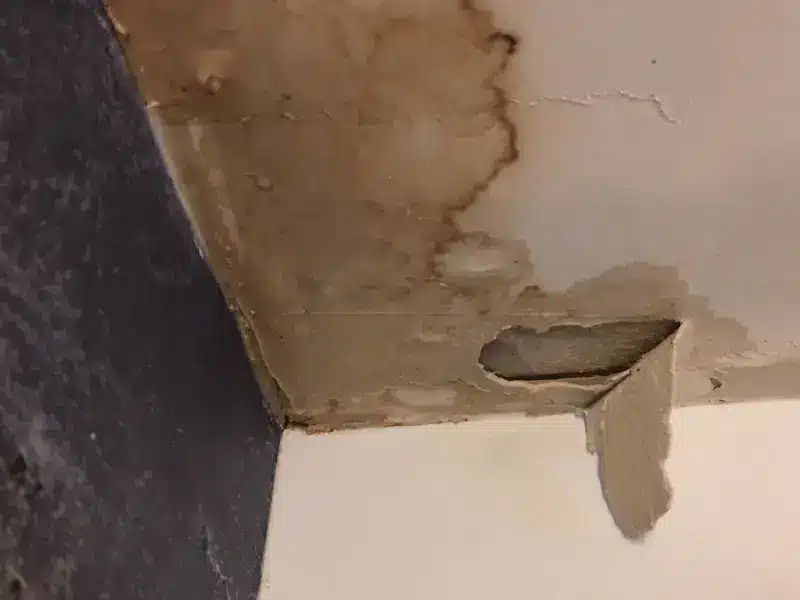




Quick Answer: A water spot on ceiling but no leak is usually caused by hidden moisture traveling through insulation, drywall, or framing from a plumbing drip, AC condensation, attic humidity, or a small roof entry point. Start by checking what’s directly above the stain (bathroom, ducts, attic), then look for wet insulation, duct sweat, or slow pipe seepage. Document the stain size, contain any active dripping, and reduce indoor humidity right away. If the stain grows, smells musty, or appears near electrical fixtures, treat it as urgent. Finding the true source quickly prevents mold and structural damage.
Add Your Heading First, Understand What a Ceiling Stain Really Means Text Here
A ceiling stain is a clue not a diagnosis. You can see a water spot on ceiling but no leak because water often doesn’t drip straight down. It can move along wood, nails, and even wiring before it shows up as a water spot / ceiling stain.
A stain might look like a brown stain / yellow ring discoloration, a faint halo, or even irregular dark marks. In some homes, it’s a circular stain around vents; in others, it spreads with a soft edge stain that slowly darkens.
Safety Checklist Before You Investigate Further
- Put a bucket under any active drip and protect flooring.
- If you see bubbling drywall, bulging ceiling bubbles, or sagging drywall / ceiling sag, don’t stand under it.
- Turn off power to nearby lights if water is close to fixtures (electrical risk).
- Take photos now for documentation especially if the stain expands.
7 Common Reasons You Get a Water Spot With No Visible Leak
If you have a water spot on ceiling but no leak, the culprit is usually one of these sources many start as slow moisture that builds up over time.
Hidden Plumbing Leak Above or Nearby
A hidden plumbing leak can come from a small pipe fracture / cracked pipe, leaky pipe joints / fittings, or a loose plumbing connection that releases tiny amounts of water.
This is especially common when there’s an upstairs bathroom leak directly above the stain, or when the ceiling sits under a wet area like laundry or kitchen plumbing.
In many cases, the real issue is a water leak behind a wall that slowly travels through framing before showing up as a ceiling stain, which is why the visible spot often appears far from the actual source.
Shower, Toilet, or Fixture-Related Leaks
Water can escape from a leaky shower drain, damaged shower pan, or a failing toilet seal like a deteriorated toilet wax ring / toilet seal. These are classic fixture-related leaks (tubs, sinks, showers) they often worsen shortly after the fixture is used.
Leaky faucets and fixtures can also contribute to moisture migration when small drips run into hidden framing cavities over time.
Air Conditioning Condensation and Drain Issues
In warmer months, a water spot on the ceiling but no leak often traces back to air conditioning condensation forming on evaporator/AC coils condensation and draining through a line that’s compromised.
Common failures include a condensate drain line (clogged), a condensate line / drain line leak, or an overflowing drain pan / drip pan. In attic installs, a cracked / rusted drip pan can quietly spill water that soaks insulation before staining the ceiling.
Duct Sweating or HVAC Leakage Near the Stain
If the stain sits near a vent, you may be seeing air ducts sweating caused by poorly insulated ducts and high indoor moisture. Sometimes ductwork leaks (moisture escape) allow condensation to form in the wrong place, especially during heavy AC use.
Attic Humidity and Ventilation Problems
Attic airflow issues can make moisture build up and condense on cold surfaces. Poor attic ventilation can lead to condensation on underside of roof decking, which drips onto wet insulation (attic) and then into ceiling materials.
Roof Entry Points that Don’t Drip Every Time
Not every roof issue shows a steady drip. Flashing (chimneys/vents/skylights) can fail intermittently, as can seals around skylights / roof vents penetrations. Missing / damaged shingles might only leak under certain angles of rain and wind.
A subtle water spot on the ceiling but no leak can also be driven by wind-driven rain / storms (intermittent leaks) . You get staining without a clear active leak when you check later.
Underlayment and Fastener Pathways
Even if the surface looks fine, water may get past shingles and meet a compromised underlayment (water barrier). It can then travel along nails and framing, including nail pops / exposed nail heads, before staining drywall.
Quick Clues That Tell You Where the Moisture Is Coming From
Use these location and timing cues to narrow down your water spot on ceiling but no leak problem quickly.
Timing Clues
- If the stain appears after showers or laundry cycles, suspect plumbing.
- If it grows when the AC runs, suspect condensation or duct sweating.
- If it shows up only after storms, suspect roof pathways even if there’s no drip.
Location Clues (What’s Directly Above Matters)
- Bathrooms above = drains, supply lines, shower pans, toilet seals.
- Vents/duct routes above = condensation, sweating, HVAC drain problems.
- Attic above = insulation saturation, roof decking condensation, flashing.
Roof vs Plumbing vs HVAC vs Attic Condensation
Signal | Roof Pathway | Plumbing | HVAC/Condensation | Attic Humidity |
When it shows | Storm-dependent | Anytime, often after fixture use | During heavy AC use | After humidity swings |
Typical stain | Darker, uneven | Ringed, can spread | Often near vents | Small, widespread patches |
What you might find | Wet decking/entry point | Damp fittings, slow seep | Drain line issue, pan overflow | Condensation on decking |
Common tell | Edge/valley/penetrations | Under bathrooms/kitchens | Circular stain around vents | Multiple spots, musty air |
Step-by-Step: How to Trace the Source Without Guesswork
If you’re dealing with a water spot on the ceiling but no leak, follow this order to avoid chasing the wrong area.
- Mark and measure the stain (date it, note growth).
- Check what’s above the spot (bathroom, duct, attic access).
- Look for material clues: ceiling tiles (staining), damp drywall, peeling paint.
- Inspect the attic safely (if accessible): look for roof decking (OSB / plywood) discoloration, damp spots, and wet insulation (attic).
- Run a controlled test: use a shower, then re-check; run AC, then re-check.
- Follow pathways: remember water traveling (not dripping straight down) can place the stain feet away from the source.
If you’re struggling to pinpoint it, a professional water leak detection technician can often locate moisture patterns without unnecessary demolition.
Why the Stain Can Show Up Days or Weeks Later
A common frustration is: Nothing is leaking now why is the stain showing up? The answer is moisture storage and release.
Drywall and insulation can hold water. Temperature changes can shift moisture, especially during seasonal transitions in Illinois. That’s why a stain might appear after the leak event is over even when you’re sure there’s no active drip.
Also, humidity / moisture buildup can repeatedly wet materials without a single obvious leak moment.
When It’s an Emergency (Don’t Wait)
Treat the situation as urgent if you notice:
- Musty odor / damp smell
- Rapidly expanding stain
- Bubbling drywall or softness to the touch
- Sagging drywall / ceiling sag that looks like it may collapse
- Water near wiring or lights
In these cases, it’s smart to loop in a local plumbing company (or the appropriate trade) quickly so you’re not guessing while damage spreads.
Quick Fixes You Can Do Today (While You Find the Source)
These won’t solve the root cause, but they can reduce damage while you investigate your water spot on the ceiling but no leak.
- Lower indoor humidity (dehumidifier, fans, exhaust).
- Clear the AC drain outlet if accessible; check for blockage signs.
- If duct sweating is suspected, improve insulation around ducts.
- If the stain is under a bathroom, stop using that fixture until inspected.
- Replace obviously soaked insulation once the source is fixed.
What to Do in the First 24-72 Hours
Timeframe | What to Do | Why It Matters |
First 0-4 hours | Document stain, protect area, reduce humidity | Limits spread and supports insurance evidence |
4-24 hours | Inspect above (attic/fixtures/ducts), run controlled tests | Helps isolate cause quickly |
24-48 hours | Dry affected areas aggressively | Mold can start fast in damp materials |
48-72 hours | Plan repairs + stain treatment | Prevents recurring discoloration |
How to Fix the Damage After You Stop the Moisture
Once you’ve stopped the source, your next goal is preventing the stain from returning.
- Dry the area fully (not just the surface).
- Replace compromised drywall if it’s soft, sagging, or moldy.
- Seal stains with a stain-blocking primer before repainting.
- Address insulation issues so moisture doesn’t come back.
This is where many people search for how to fix water spots on the ceiling but fixing appearance without fixing moisture always fails.
Use These Once Each
To ensure full topical coverage, here are the exact problem phrases homeowners search each addressed here in-context:
- If you’re seeing water stains on the ceiling but no leak, start with timing + what’s above the spot.
- Recurring water spots on the ceiling near vents often point to HVAC condensation or duct sweat.
- The most common ceiling stains cause is hidden moisture migration from plumbing, HVAC, or attic condensation.
- A water mark on the ceiling pattern that grows after showers often indicates bathroom drain or seal issues.
- A yellow stain on the ceiling but no leak can come from slow seepage that’s been drying and re-wetting.
- A wet spot on the ceiling after heavy rain suggests storm-driven roof entry points, even without constant dripping.
- For water stains on ceiling repair, prioritize drying, stain-block primer, then paint only after the source is fixed.
- Brown water stains on the ceiling can indicate prolonged moisture exposure through drywall and insulation.
- Don’t just cover water spots on the ceiling with a paint seal and fix the root moisture pathway first.
Need Help Finding the Source Fast? Call RootBusters
If your ceiling stain is growing, returning, or showing signs of moisture damage, RootBusters Plumbing, Sewer and Drains Inc. can help you pinpoint the cause and stop it before it becomes a bigger repair.
Call RootBusters Plumbing, Sewer and Drains Inc. at 8442477668 to get clarity fast and protect your home.
FAQs About Water Spot on Ceiling but No Leak Found
Why do I have a water spot on the ceiling but no leak?
A water spot on the ceiling but no leak usually means moisture traveled and collected above the drywall from plumbing seepage, AC condensation, attic humidity, or an intermittent roof entry point.
Can condensation really cause ceiling stains?
Yes condensation from HVAC systems, sweating ducts, or humid attic air can drip onto insulation and drywall and leave visible stains over time.
How can I tell if it’s plumbing or HVAC?
If the spot worsens after shower use, suspect plumbing. If it grows when the AC runs or appears near vents, suspect HVAC condensation or duct sweating.
Is it safe to paint over a ceiling water spot?
Only after the source is fixed and the area is fully dried; otherwise the stain commonly bleeds through or returns.
What’s the fastest way to stop more damage today?
Contain any drip, lower humidity, avoid using fixtures above the stain, and inspect the attic/duct area if it’s safe to do so.