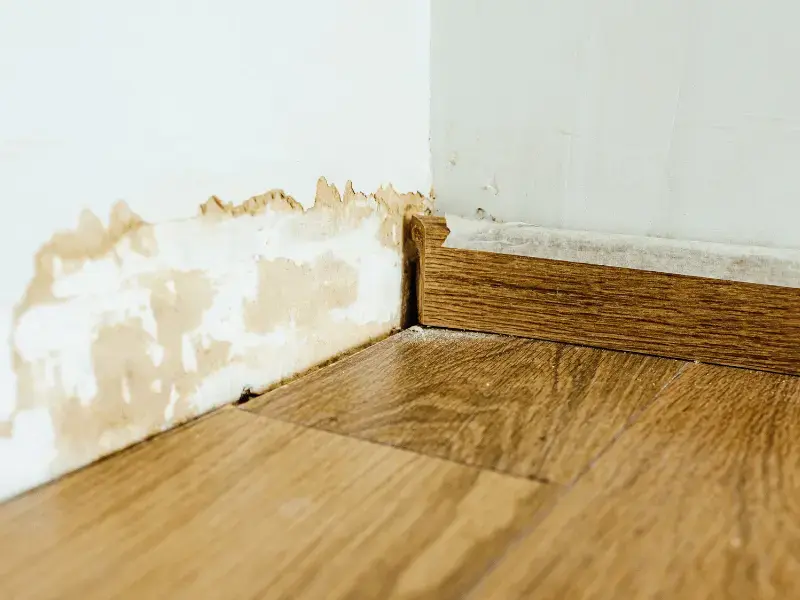




Quick Answer: A water leak behind wall is easiest to catch early by watching for discoloration, peeling paint, musty odors, and unusual sounds then confirming with a water meter test and targeted moisture readings. Start by shutting off all fixtures and checking if the meter still moves, which signals hidden flow. Next, scan for damp or cool patches, bulging drywall, and soft spots near bathrooms, kitchens, and laundry lines. If you hear dripping or running water when everything is off, take it seriously pressurized line leaks can worsen fast. Acting within 24-48 hours can reduce mold risk and prevent structural damage.
A water leak behind a wall is the kind of plumbing problem that does its worst damage before you even know it is happening. By the time you see a stain bloom across the drywall, the pipe behind it has probably been leaking for weeks or months, soaking framing, insulation, and subfloor. The good news: there are clear warning signs you can spot early, and modern leak detection can locate the source without tearing up your home. This guide walks through how to recognize a wall leak, what causes them, what they cost to fix, and when to call a professional. If you are already seeing water staining and need help fast, call (844) 247-7668 for same-day professional water leak detection across Bolingbrook and the surrounding area.
10 Warning Signs of a Water Leak Behind a Wall
The earlier you catch a wall leak, the cheaper the repair. Watch for these signs:
- Wet or damp patches on drywall that come and go (or stay damp permanently)
- Discoloration on the wall: yellow, brown, or rust-colored staining, often with a darker outline
- Peeling paint, bubbling wallpaper, or warped baseboards in a specific area
- Musty, mildew, or mold smell localized to one room or wall
- Visible mold growth on drywall, baseboards, or floor near a wall
- Soft or spongy drywall when pressed
- Warm spots on a wall (suggesting a hot water line leak inside)
- Sound of running water when no fixture is on
- Drop in water pressure or unexplained increase in water bill
- Ceiling stains directly below an upstairs bathroom or wall (often the leak is actually one floor up; see our guide on water spots on the ceiling but no visible leak)
If you spot two or more of these signs in the same area, you almost certainly have an active leak. Stop guessing and get a professional leak detection inspection. Detection costs $275 to $475, and it almost always saves multiples of that in avoided water damage.
How to Detect a Water Leak Behind a Wall (DIY Checks Before Calling)
Before you call a plumber, you can run a few quick tests to confirm whether you actually have a leak (and sometimes narrow down which side of the wall):
Check 1: The water meter test. Turn off every fixture, faucet, ice maker, and appliance in your home. Then go outside and look at your water meter. If the indicator dial is still moving, water is flowing somewhere, and you almost certainly have a leak. This is the most definitive single test you can run yourself.
Check 2: The pressure isolation test. Shut off your main water valve. Note the time. Open a single faucet to drain the line, then close it. Watch the system for 30 minutes. If you hear any dripping or hissing, the leak is on the supply side. If everything is silent, the issue may be on the drain side or with a fixture.
Check 3: The wall touch test. Run your palm slowly over the suspect wall section. Hot spots suggest a hot water line leak. Cold spots may indicate a cold water line leak or active drain leak. Damp spots are obvious leak indicators.
Check 4: The flashlight inspection. Hold a bright flashlight parallel to the wall surface so the beam grazes the wall. Bumps, warping, or unevenness show up much more clearly under raking light than direct light.
Check 5: The moisture meter (optional). A consumer moisture meter ($25 to $60 on Amazon) reads moisture content in drywall and wood. Anything over 16% in wood or noticeably elevated in drywall indicates active moisture. This is a useful tool if you suspect a wall leak but cannot see clear signs.
If any of these checks confirms suspicion, the next step is professional detection. DIY further than this usually means cutting drywall, and that is the wrong move until you know exactly where the leak is. Call (844) 247-7668 to schedule non-invasive professional leak detection.
Common Causes of Water Leaks Behind Walls
Once a leak is confirmed, the question becomes what is leaking. The most common causes:
Pinhole leaks in copper pipes: tiny perforations in copper supply lines, usually caused by pitting corrosion. Most common on the hot water side. A pinhole leak releases a few drops to a steady drip per hour and is the most common hidden leak type in homes built between 1970 and 2000.
Failed pipe fittings or solder joints: connections between pipe sections weaken over time, especially at elbows, tees, and shutoff valves. Failed fittings often start as a slow seep that worsens over weeks.
Failed shutoff valves behind fixtures: the shutoff valves inside walls behind toilets, sinks, and washing machines can fail without obvious warning. These leaks are often discovered when water travels along a stud cavity and emerges several feet away from the actual source.
Cracked drain pipes inside walls: PVC and ABS drain pipes can crack from settling, freeze damage (rare in conditioned interior walls), or impact damage during renovations. Drain leaks are different from supply leaks because they only release water when the fixture is being used.
Failed wax ring or flange under upstairs toilets: a leaking toilet seal sends water down between the subfloor and the ceiling below, then along the framing. Often the ceiling stain or wall stain appears several feet away from the actual toilet.
Tub or shower valve leaks: the most common single source of inside-the-wall leaks. The shower valve assembly behind the wall develops a slow drip that runs down the back of the valve plate, into the wall cavity, and eventually to the floor below.
Roof leaks misdiagnosed as plumbing leaks: not technically a plumbing problem, but commonly misidentified. If a wall leak only appears during or immediately after rain, the source is likely the roof, flashing, or a window seal, not a pipe.
Condensation from improperly insulated pipes: cold water lines running through warm humid wall cavities can sweat enough to mimic a slow leak. Common in older homes in summer.
How Much Does Water Leak Repair Cost?
Costs vary widely based on the cause, the location, and how much wall and finish work is needed to access and repair the leak. Here are typical ranges in the Bolingbrook area:
Detection only: $275 to $475 (often credited back if you proceed with repair through us)
Pinhole copper leak spot repair: $400 to $900 (pipe repair plus drywall access)
Failed shutoff valve replacement: $300 to $650
Tub or shower valve replacement: $475 to $950 (more if tile work is needed for access)
Wax ring or toilet flange repair: $375 to $750
Drain pipe section repair inside wall: $600 to $1,400
Partial re-pipe of a problematic section: $1,200 to $3,500
Full home re-pipe with PEX or new copper (for homes with repeated pinhole failures): $4,500 to $15,000
Drywall and finish restoration after repair: $300 to $1,500 depending on the size of the opening and finish work
The biggest variable is whether tile, cabinetry, or built-ins are in the way of the leak. Open drywall access is cheap. Tile and cabinet access doubles or triples the labor. A good plumber will tell you the access cost separately from the pipe repair cost.
How Much Damage Can a Hidden Wall Leak Cause?
The numbers are worse than most homeowners expect. According to the Insurance Information Institute, water damage is one of the most common homeowner’s insurance claims, with the average claim around $13,954.
A small pinhole leak releasing just 5 gallons of water per hour produces:
- 120 gallons per day
- 3,600 gallons per month
- 43,800 gallons per year
That much water inside a wall cavity will:
- Soak drywall (requires removal and replacement of any saturated sections)
- Saturate insulation (must be removed; wet insulation grows mold and loses R-value)
- Rot wood framing (studs, plates, headers, and subfloor)
- Damage flooring (warped hardwood, peeling vinyl, ruined carpet pad)
- Promote mold growth within 24 to 48 hours of saturation
- Compromise electrical wiring if it travels into outlet boxes
- In severe cases, undermine structural integrity
A leak caught in the first 7 to 14 days is usually a $500 to $1,500 repair. The same leak caught at 90 days often runs $5,000 to $15,000 once water damage, mold remediation, and finish restoration are included. Time is the variable that hurts you most.
When to Call a Plumber Immediately
Some wall leaks can wait until morning. Some cannot. Call a plumber immediately if:
- Water is actively flowing or dripping at a visible rate
- Drywall is sagging, bulging, or feels wet to the touch over a large area
- You smell strong sewer gas in addition to seeing moisture
- The leak is near an electrical panel, outlet, or fixture
- The ceiling below shows active water staining or dripping
- The water has reached carpet, hardwood, or finished flooring
- You hear continuous water running with all fixtures off
For these situations, RootBusters provides 24/7 emergency plumbing service across Bolingbrook and the surrounding Chicagoland area. Call (844) 247-7668 for immediate dispatch.
How to Prevent Water Leaks Behind Walls
Most wall leaks are preventable with basic preventive plumbing maintenance:
- Have your home’s plumbing inspected every 2 to 3 years, especially if your home was built before 2000 or has copper supply lines
- Test your water pressure annually. Pressure above 80 psi accelerates wear on every fitting, valve, and fixture in the home. Add a pressure regulator if your incoming pressure is too high.
- Replace older shutoff valves before they fail. Multi-turn gate valves over 20 years old are a common silent failure point.
- Watch your water bill for unexplained increases. A 10% jump month over month with no change in use is worth investigating.
- Insulate cold water lines in unconditioned spaces and exterior walls to prevent condensation and freeze damage.
- Replace toilet supply lines every 5 to 7 years. Braided stainless steel lines are inexpensive insurance against a catastrophic failure.
- Schedule annual maintenance on your water heater, hose bibs, and any whole-house water filtration. Catch small issues at inspection before they become emergencies.
- Address chemical drain cleaner habits. These products damage pipe interiors and accelerate corrosion at joints.
The biggest single thing you can do is pay attention. Most homeowners can recall, in hindsight, the first sign that something was off. The leak did not happen overnight. The detection just happened too late.
When you’re trying to detect water in walls, use non-destructive methods first.
Signs, Likely Causes, and What to Check Next
Symptom You Notice | Likely Source | What to Check |
Peeling paint or wallpaper | Slow seepage | Moisture meter scan + plumbing routes |
Yellow or brown stains | Ongoing moisture | Meter test + nearby fixtures |
Bulging drywall | Trapped water | Check supply lines + drainage joints |
Musty odor | Mold risk | Ventilate + moisture readings |
Running water sounds | Pressurized leak | Shutoff isolation + professional tools |
Warped or buckled walls | Prolonged saturation | Inspect wall cavity boundaries |
DIY Checks vs. Call for Help Triggers
What You Find | Safe DIY Next Step | When It’s Time to Call |
Small stain, no growth | Meter test + moisture scan | If it expands in 24-48 hrs |
Musty smell | Dehumidify + locate wet zone | If mold appears or smell persists |
Noise only | Quiet-house listening test | If you confirm flow with meter |
Low pressure across home | Check shutoff valves | If pressure drop persists |
Soft drywall | Stop nearby water use | If wall bulges or sags |
FAQs About Water Leak Behind Wall
How do I know if I have a water leak behind a wall?
The clearest signs are wet or damp patches on drywall, yellow or brown staining, peeling paint or bubbling wallpaper, musty smells, soft or spongy drywall, warm spots (hot water line leaks), and the sound of running water when no fixture is on. The most definitive single test is the water meter test: turn off every fixture in the home and check whether the meter dial keeps moving. If it does, you have a leak.
How much does it cost to fix a water leak behind a wall?
Most wall leak repairs in Bolingbrook run $400 to $1,400, including pipe repair and drywall access. Tub or shower valve leaks cost $475 to $950, more if tile must be cut and replaced. Detection itself costs $275 to $475. Major issues like repeated pinhole leaks may justify a full home re-pipe at $4,500 to $15,000. We provide a written flat-rate quote after diagnostic detection.
Can a wall leak go away on its own?
No. Pipe leaks do not self-heal. What sometimes looks like a leak “going away” is one of three things: water has saturated the area and now travels further before showing up visibly, debris has temporarily clogged the leak point (the leak will resume), or seasonal moisture has masked the symptoms. Get it inspected. Untreated wall leaks always get worse.
How long does professional water leak detection take?
Most residential wall leak detection appointments take 1 to 2 hours. The plumber will use acoustic listening equipment, thermal imaging, pressure testing, and in stubborn cases tracer gas detection to locate the leak to within a foot. You get a real-time location and an initial assessment before the plumber leaves. Written reports are provided same-day or next-day.
Will insurance cover repair of a water leak behind a wall?
It depends on your policy. Most homeowner policies cover sudden and accidental water damage (such as a pipe that bursts suddenly) but not the cost of the failed pipe itself. They generally do not cover damage from long-term gradual leaks that the homeowner could reasonably have detected. This is one reason early detection is so important: damage caught early is more likely to be covered. We provide thorough documentation suitable for any insurance claim.
Should I open the wall myself to find the leak?
Not before professional detection. Speculative wall opening usually misses the leak (water travels along framing and emerges far from the source) and creates unnecessary repair work. Professional acoustic and thermal detection locates leaks to within a foot without cutting anything. Once the location is confirmed, only the small area needed for repair gets opened.
What is a pinhole leak and why are they so common in copper pipes?
A pinhole leak is a tiny perforation that develops in a copper water supply pipe due to a process called pitting corrosion. The corrosion happens from the inside of the pipe and is influenced by water chemistry, pipe age, and pipe quality. Homes built between 1970 and 2000 with copper plumbing are most susceptible. Once one pinhole appears, more usually follow within months or years on the same pipe system.
Can a wall leak cause mold? How fast?
Yes, easily. Mold spores are present in essentially every home, and they activate within 24 to 48 hours of contact with moisture. A wall leak that runs for more than two or three days will almost certainly produce mold inside the wall cavity, even if no mold is visible yet. Mold remediation is one of the biggest hidden costs of late-stage leak detection.
Is a water leak behind a wall a plumbing emergency?
It depends on the severity. A slow stain that has appeared over weeks is not a 2 AM emergency, but it does need attention soon. Active dripping, sagging drywall, leaks near electrical components, or rapid water damage are emergencies that warrant immediate service. We provide 24/7 emergency plumbing dispatch at (844) 247-7668.
If you suspect a water leak behind one of your walls, do not wait for the visible damage to get worse. Professional, non-invasive leak detection costs a fraction of what late-stage water damage repair costs, and most leaks can be located in under two hours without cutting a single piece of drywall. RootBusters Plumbing, Sewer and Drains, Inc. provides honest, accurate leak detection and repair across Bolingbrook, IL and the surrounding Chicagoland area. Call (844) 247-7668 to schedule professional water leak detection or request service online.