



Quick Answer: Your kitchen sink is draining slowly because food debris, grease buildup, soap scum, or a clog in the P-trap or drainpipe is restricting water flow. Fix it by flushing with boiling water, checking the garbage disposal, cleaning the P-trap, or using a drain snake to remove blockages.Lorem ipsum dolor sit amet, consectetur adipiscing elit. Ut elit tellus, luctus nec ullamcorper mattis, pulvinar dapibus leo.
Understanding Why Your Kitchen Sink Is Draining Slowly
A kitchen sink draining slowly usually means something inside the drain system is blocking or narrowing the water path. In most cases, the issue comes from food debris, grease buildup, soap scum, or a hidden obstruction inside the drainpipe, sink stopper, or P-trap. Even when the sink appears normal from the surface, sediment, sludge, and gunk deep inside the drain can slow the flow dramatically.
If you are wondering why your kitchen sink is draining slowly, it almost always signals a developing clog caused by everyday materials. Over time, these materials collect and form layers that restrict drainage and create bad odors, stains, and bacteria growth.
Most Common Causes of a Kitchen Sink Draining Slowly
Below are the most common internal plumbing issues that lead to a kitchen sink draining very slowly:
1. Grease and Food Debris Buildup
Grease sticks to pipe walls and traps other particles like rice, pasta, coffee grounds, and breadcrumbs. The mixture becomes thick and hard, creating a stubborn clog.
Quick Fix: Flush with hot water and dish soap to melt surface grease and improve temporary flow.
2. Soap Scum and Gunk Accumulation
Soap residue, oils, and minerals bind together inside pipes. This especially affects the sink stopper, which often collects grime and slows drainage.
3. P-Trap Blockages
The P-trap under the sink is designed to catch debris before it enters the main drain. This makes it one of the most common clog locations.
4. Garbage Disposal Obstructions
A kitchen sink with disposal draining slowly often means the disposal blades are jammed or buildup has formed inside the grinding chamber.
5. Vent Pipe Issues
Blocked vent pipes create pressure imbalance, resulting in slow drainage even when pipes are clear.
6. Main Sewer Line & Drainpipe Problems
Sediment, corrosion, or deeper blockages reduce flow in the main sewer line or drainpipes, causing multiple fixtures to drain slowly.
Quick Diagnostic Checklist
Use this checklist to quickly understand the problem before beginning DIY repairs:
| Symptom | Likely Cause | DIY Difficulty |
|---|---|---|
| Slow gurgling drain | Partial clog / vent pipe issue | Medium |
| Standing water | P-trap or drainpipe blockage | Medium |
| Slow drain + disposal noise | Jammed disposal | Easy |
| Smelly drain | Mold, mildew, food debris | Easy |
| All sinks slow | Main sewer line issue | Hard |
How to Fix a Kitchen Sink Draining Slowly (Step-by-Step DIY Guide)
Step 1: Flush With Boiling Water
This works well when the sink draining slowly kitchen issue is caused by soft grease or soap residue.
Steps:
- Boil ½ gallon of water.
- Pour directly into the drain.
- Let it sit for 1 minute.
- Repeat up to 2 times.
Important: Avoid boiling water if your pipes are PVC, it may weaken the plastic.
Step 2: Reset & Test the Garbage Disposal
If you have a disposal, it may be clogged internally.
Tips:
- Press the reset button under the disposal.
- Use an Allen wrench to rotate the disposal manually (NEVER put your hand inside).
If flow improves, the clog was in the disposal.
Step 3: Use a Plunger Correctly
A plunger creates pressure that pushes the blockage loose.
Quick Tip:
A flat-bottomed sink plunger works better than a toilet plunger.
Step 4: Use the Baking Soda + Vinegar Method
This natural reaction breaks down soft blockages without harsh chemicals.
Supplies Needed:
- Baking soda
- White vinegar
- Drain stopper
- Hot water
Let it fizz for 15 minutes, then flush with hot water.
Step 5: Snake the Drain
A drain snake, plumber’s auger, or even a coat hanger can pull out deeper clogs inside the drainpipe.
This is highly effective for sinks where kitchen sink draining slowly no blockage is visible on the surface.
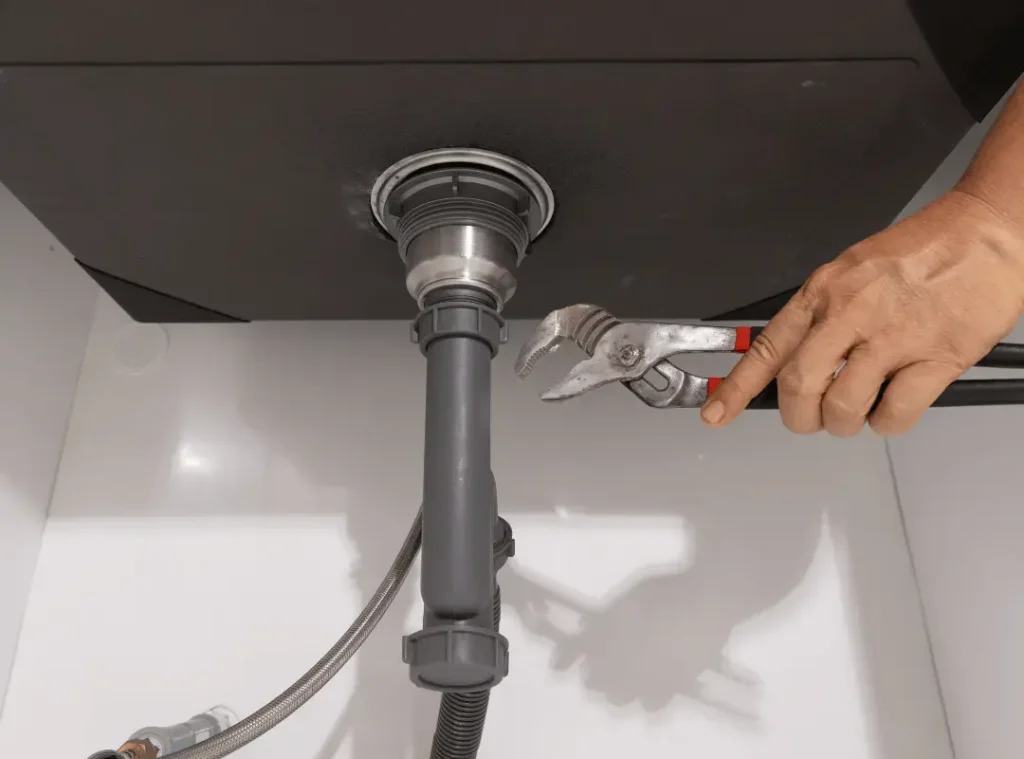
Step 6: Remove & Clean the P-Trap
If all else fails, the clog is almost always in the P-trap.
How to Clean the P-Trap:
- Place a bucket under the trap.
- Unscrew both slip nuts.
- Remove the trap and clean out gunk.
- Reassemble and test.
Cleaning the P-trap also eliminates mold, mildew, bad odors, and sediment buildup.
Step 7: Check the Horizontal Pipe & Wall Drain
If water still drains slowly, check the pipe leading into the wall.
A Sewer Video inspection may be needed if deeper pipe issues or corrosion are suspected.
Advanced Reasons Your Kitchen Sink Drains Slowly (Rare but Important)
Tree Root Intrusion
Roots creeping into main lines slow every drain in the home.
Septic System Sludge
When sludge fills the septic tank, sinks drain slowly throughout the home.
Deteriorated or Corroded Pipes
Old pipes collect rust flakes, sediment, and internal scaling.
Stuck Foreign Objects
Rings, toys, utensils, bottle caps, anything can lodge inside the drain opening.
Signs Your Kitchen Sink Is Draining Slowly but Not Clogged
Sometimes a kitchen sink draining slowly not clogged still drains slowly because of:
- Vent pressure imbalance
- Grease film narrowing the pipe
- Soap scum lining the drain
- Partial blockage in other fixtures
Use this table to identify the cause:
| Condition | Visible Clog? | Likely Issue |
|---|---|---|
| Slow flow + gurgling | No | Vent pipe or partial drainpipe clog |
| Bad odor | No | Mold, mildew, grease film |
| Water backs into other sink | No | Shared drainpipe blockage |
Preventing Slow Drains (Long-Term Maintenance Tips)
To stop a kitchen sink draining slowly from returning, build these habits:
Prevention Habits:
- Use a drain mesh catcher to stop food particles.
- Avoid pouring fats, oils, and grease down the drain.
- Flush with hot water after each major use.
- Clean the P-trap every 6–12 months.
- Run vinegar ice cubes through your disposal monthly.
For more guidance, see our internal guide on Drain Cleaning Tips.
When DIY Fixes Aren’t Enough
If your sink stays slow after all troubleshooting methods, the clog may be deeper in the drainage system.
At this point, calling professional local plumbers is the safest and fastest solution. They use tools like powered augers, hydro-jetting equipment, and advanced imaging to diagnose the root cause.
Many homeowners also run into similar issues with a Slow Bathroom Sink Drain, which often signals a shared drainpipe problem.
Professional-Level Recommendations for Long-Term Drain Health
Even when your kitchen sink is draining slowly not clogged by food, deeper issues can form over time. Scheduling Bolingbrook Drain Cleaning or a routine inspection helps ensure everything flows properly.
If multiple fixtures drain slowly, it may indicate a deeper issue requiring expert Residential plumbers.
Call RootBusters for Fast, Reliable Drain Solutions
If your kitchen sink is still draining slowly after trying these DIY steps, it’s time for expert help.
RootBusters Plumbing, Sewer and Drains Inc.
📞 Call Now: (844) 247-7668
Our team specializes in removing stubborn clogs, cleaning P-traps, repairing garbage disposals, diagnosing sewer line issues, and restoring fast, healthy water flow. One call gets your kitchen back to normal—quickly and safely.
FAQs About Why Your kitchen sink draining slowly
Why is my kitchen sink draining slowly all of a sudden?
Sudden slow drainage usually means a new obstruction, often grease, food, or a stuck object, has restricted the flow inside the P-trap or drainpipe.
What can dissolve grease in my kitchen sink?
Boiling water, dish soap, and baking soda + vinegar help break down grease films. For heavy buildup, mechanical cleaning is needed.
Why do both sides of my double sink drain slowly?
Double sinks share the same drainpipe, so a blockage in the shared line affects both bowls equally.
Can I use chemical drain cleaners?
Avoid them. They corrode pipes, worsen clogs, and damage fittings over time.
What if I have a slow drain but no blockage visible?
This often happens when internal pipe walls are coated with grease or soap scum, narrowing the water passage.